Oct 19, 2026
Neither option wins outright. Your fuel access, load size, budget, and usage frequency decide the Diesel Generator vs gas generator question. At FUZHOU ONEW POWER MACHINERY CO., LIMITED, we build power equipment for the critical moments when failure isn't an option. From a standby set guarding a hospital switchboard to a lighting tower working through the night on a remote site, our job is the same: deliver dependable power, built properly, and supported for the long haul. This comparison weighs backup power sources across fuel availability, efficiency, and reliability, providing a clear engineering framework for matching generator type to your scenario before you buy.
Key Takeaways
Diesel generators excel at heavy, continuous use, and remote sites because they are durable, fuel-efficient, and scale seamlessly up to 3,000 kW containerized multi-megawatt plants.
Gas generators suit light, occasional backup and areas with pipeline access because they need less maintenance and run cleaner, while portable 1–15 kW gasoline sets provide agile temporary site power.
Single-source manufacturing across four product families—diesel, gasoline, marine, and mobile lighting towers—allows distributors and contractors to source their entire power portfolio from one factory with one quality standard.
Match your generator to your fuel access, load profile, and regional frequency requirements (50Hz vs 60Hz) to ensure long-term stability without over-investing.
Diesel vs Natural Gas vs Propane Generators
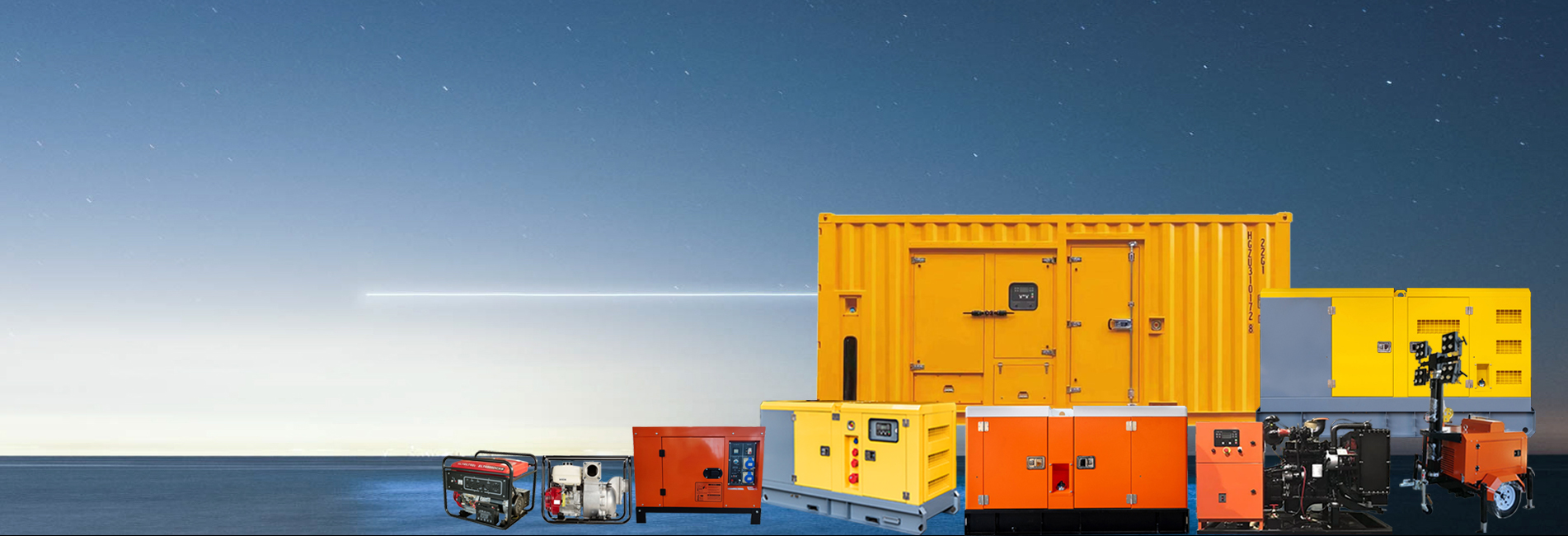
You can group diesel vs natural gas vs propane generators by how each one ignites its fuel. That single design choice shapes efficiency, maintenance, and where each unit fits best. The diesel vs. natural gas generators debate starts with compression ignition versus spark ignition, and your generator fuel type determines much of the operating cost you will face. To serve these varied operational needs, Onew Power manufactures four core product families on one integrated platform: industrial diesel gensets, portable gasoline units, vibration-isolated marine sets, and diesel-powered mobile lighting towers.
How diesel generators work
A diesel generator draws air into the cylinder and compresses it to a high temperature. The injector then sprays fuel into that hot air, and the mixture ignites without a spark plug. This compression ignition gives diesel engine generators high torque and strong fuel economy under load. A model such as the 43kW 53kVA FAWDE Diesel Generator shows how a compact commercial diesel generator suits sustained duty. When engineered on globally proven power platforms—such as Cummins, Perkins, Deutz, Kubota, Weichai, or Yuchai—these systems deliver published performance curves, worldwide service networks, and dependable parts availability.
Diesel generators hold up exceptionally well in continuous service. The fuel itself lubricates the injection system, and the robust build tolerates heavy cycling. With custom canopy options ranging from open skids to weather-protective and super-silent enclosures, you get predictable, stable output for commercial buildings, factories, mines, and telecom stations.
How natural gas and propane generators work
Natural gas generators and propane generators use a spark-ignition engine much like gasoline generators. A spark plug fires a fuel-and-air mixture inside the cylinder. These units connect to a utility gas line or a stored propane tank, so you avoid liquid fuel handling. Natural gas powered generators offer a steady pipeline supply, and propane generators serve sites without a gas main.
Both types run cleaner than diesel and need less frequent oil service. They shine in light, intermittent backup duty for homes and small businesses. For portable jobsite power, rental fleets, events, and emergency response, portable gasoline generator sets in the 1 to 15 kW range offer an agile alternative without the mechanical overhead of larger stationary plant equipment. The key differences and use cases come down to fuel access, mobility needs, and load profile.
Diesel Generator vs Gas Generator: Fuel Efficiency
Fuel efficiency separates these two technologies more sharply than any other factor. The diesel generator vs gas generator comparison starts with energy content per gallon. A gallon of diesel yields roughly 120,000–130,000 Btu, equivalent to about 35–38 kWh. A gallon of propane yields roughly 91,500 Btu, equivalent to about 27 kWh. Diesel simply carries more energy into the combustion chamber.
Diesel's thermal efficiency edge
Compression ignition gives diesel engines a thermal efficiency advantage over spark-ignition engines, especially under heavy loads. Diesel has an energy density of approximately 35 MJ per litre, while propane provides about 26 MJ per litre. That higher energy content per unit volume translates into more power per gallon and greater energy output.
The practical numbers reinforce the point:
Diesel: about 9.7 kWh per litre of energy content, delivering roughly 3.0 kWh per litre at 75% load
Natural gas: roughly 2.2 kWh per litre-equivalent in practical output
Propane: about 6.9 kWh per litre of energy content, delivering roughly 1.8–1.9 kWh per litre
Diesel generators reach peak efficiency at 70–80% of rated load. A 100 kW unit illustrates the curve well: about 2.6 gal/hr at one-quarter load, 4.1 gal/hr at half load, and 7.4 gal/hr at full load. To verify these performance curves before release, Onew Power conducts load bank testing on every single unit, verifying step-load recovery, fuel consumption, and thermal stability so the machine performs precisely to specification under site conditions.
Gas performance at low loads
Gas units often consume more fuel per kWh than diesel, even at modest demand. At a 5 kW load, a gas generator burns roughly 0.5 gal/hr while a diesel unit burns about 0.35 gal/hr. Diesel holds its economy advantage across the load range.
This is where diesel vs gasoline generators diverge in purpose. Compact gasoline units (1–15 kW) suit short, low-load runs and rapid deployment for rental fleets and construction crews, while industrial diesel sets are engineered for prolonged, near-capacity duty. At high, spiking loads, diesel generators win on responsiveness and fuel use per kWh. Natural gas units perform strongly and predictably in steady duty with reliable pipeline access. Remember that light loads raise consumption per kWh for both types and can cause soot buildup in diesel units, so proper sizing protects your investment and your power output.
Power Output and Performance
Heavy-load capability
Diesel engines deliver strong torque at low speed, so they hold voltage and frequency under sudden load steps. A diesel generator shines when large motors start and demand spikes. Gas units respond well within their rated band, yet they lose authority as load climbs toward the top of the range. Transient response separates the two fuels most clearly.
Engine choice sets the ceiling. Pairing world-class engines with high-grade alternators like Stamford, Leroy-Somer, or Mecc Alte ensures clean waveforms and fast voltage restoration. For example, the ON-M2500P pairs an MTU 20V 4000 G23 engine with 2000kW (2500kVA) of power output at 50Hz, while the ON-B1875P uses a Baudouin 16M33G2000/5 engine rated at 1500kW (1875kVA). Supported by advanced Deep Sea, ComAp, or SmartGen controllers, these platforms seamlessly integrate paralleling, ATS, and remote monitoring for data centers, manufacturing plants, and independent power projects up to 3,000 kW per unit or multi-megawatt paralleled plants.
Sizing for an industrial power solution
Match generator rating to your largest expected demand, then add headroom for motor starting. Oversizing wastes fuel, and undersizing invites overload trips. Compare gasoline generators and diesel generators on this point, and the diesel unit tolerates sustained near-rated duty far better. Proper engineering must account for site-specific variables—ambient temperature, altitude, and duty cycle—ensuring that a 100 kVA unit for a coastal shipyard receives proper corrosion resistance, while a unit for a high-altitude mine is tuned for thinner air.
Regional standards matter too. Industrial equipment must adapt to both 50Hz and 60Hz configurations. For 60Hz sites, options like Ricardo-powered units include the YM6S9L-DA at 360kW (450kVA), the WT12D-308E at 280kW (350kVA), and the 6126A-260DE at 240kW (300kVA). A gasoline generator rarely reaches this power output class, and gasoline generators trail diesel in continuous heavy duty. Complete power coverage means sourcing compact work-crew sets, prime industrial gensets, and mobile lighting towers (4 × 320 W LED up to 4 × 1,000 W metal halide with 9–12m masts) from a single, integrated manufacturing source.
Maintenance and Lifespan
Service intervals compared
Diesel generators demand more frequent routine service than gas units. Combustion byproducts and higher particulate loads shorten the oil change window to every 100–150 runtime hours. A natural gas generator stretches that same interval to 200–250 runtime hours. You also track fuel filter replacement on diesel units, roughly every 500 hours per many manuals, plus fuel polishing once stored fuel ages beyond 12 months and day tank cleaning every five years. Tier 4 engines with SCR add DEF system maintenance, and equipped units need DPF regeneration tracking.
Gas units trade those fuel-system tasks for ignition service. You replace spark plugs every 1,000–2,000 hours, service the ignition module, inspect the gas train, and calibrate the air/fuel ratio for emissions compliance. Gasoline generators follow a similar ignition-driven schedule. Whichever fuel you choose, having immediate access to genuine replacement parts—maintained stock of filters, controllers, AVRs, sensors, lamps, and masts—prevents scheduled maintenance from turning into an extended outage.
Durability over time
Diesel engines typically outlast natural gas engines. Higher compression ratios, heavy-duty cast components, and lower operating RPMs explain the gap. Quality diesel generators commonly reach 10,000–30,000 hours, and well-maintained sets can operate for 20,000–40,000 hours—spanning 15 to 20 years or more of reliable service. Natural gas and gasoline units wear out far sooner, with light consumer gas units often tapering off much earlier. A durable model such as the 36kW 45kVA FAWDE Diesel Generator illustrates how robust in-house fabrication—including laser-cut, powder-coated base frames, heavy-duty canopies, and internally baffled fuel tanks—supports structural longevity and steady power across years of heavy cycling.
Noise, Emissions, and Safety
Sound levels and environmental impact
Sound ratings vary widely by configuration. An acoustically enclosed generator typically measures 75–85 dB(A) at one meter, while a 1500 kW diesel generator can reach roughly 105 dB(A). Engine noise alone spans 100–121 dB(A), and unsilenced exhaust climbs to 120–130 dB(A). Cooling fans and alternator induction add their own contributions.
Quiet commercial generators are typically rated around 60–70 dB at standard measurement distances.
Natural gas units generally produce smoother combustion noise than diesel generators. Modern diesel designs have narrowed this difference through high-density sound-attenuating foam, residential-grade internal mufflers, and precision-engineered canopies. On emissions, federal standards for diesel generators follow Tier 1 through Tier 4. Tier 4 Final now governs newly manufactured prime generators, cutting particulate matter by 95% and NOx by 90%. Emergency and standby units remain subject to Tiers 2 and 3, while international markets rely on CE-marked and ISO-certified builds ready for local customs clearance and installation approval.
Fuel storage and safety
Diesel fuel stores safely in a dedicated tank with proper containment, and it carries a low fire risk compared with gasoline. Gasoline generators, by contrast, require careful handling of a highly volatile fuel. Propane and natural gas units avoid liquid fuel storage entirely when connected to a pipeline.
Plan your storage around runtime and refueling access. A bulk tank supports extended outages, and an integrated base fuel tank simplifies daily operation while preventing external leaks. Gasoline generator owners should rotate fuel frequently and store it away from ignition sources. Whatever the fuel, keep the exhaust clear of occupied spaces and install carbon monoxide alarms. Confirm the power output rating against your load before you finalize the layout.
Fuel Availability and Reliability in Emergencies
Storage and refueling logistics
Fuel availability decides whether your backup unit starts when the grid fails. Propane generators hold a clear edge on long-term storage. Propane can be stored for years without breaking down, unlike gasoline. You can keep a propane tank charged for a decade or more and still draw usable fuel. Gasoline generators face a much shorter window, with gasoline degrading in roughly three to six months. Diesel fuel lasts about six to twelve months when you keep it cool and dry.
Fuel
Storage duration without degradation
Propane
10–30 years or more (indefinite shelf life)
Gasoline
About 3–6 months
Diesel
6–12 months if kept cool and dry
Refueling logistics also shape fuel availability. A bulk diesel tank supports long runtime, yet you must schedule deliveries and polish stored fuel. A propane tank refills on a predictable schedule. Natural gas generators tied to a utility line need no storage at all.
Performance during outages and cold weather
Natural gas powered generators connected to a natural gas line offer a continuous fuel supply during extended outages. You never call a supplier, and the pipeline keeps feeding the engine. That continuity strengthens reliability in emergencies for homes and facilities on a gas main. Propane units perform well in cold weather, and propane vaporizes reliably in most climates.
Diesel generators handle cold starts with block heaters, glow plugs, and winter-grade fuel. Their power output stays steady under heavy load, and they tolerate long continuous runs. Gasoline generator owners should rotate stock fuel and treat it with stabilizer. Whether deploying a stationary diesel generator on a mining site, a marine auxiliary unit (20–500 kW) aboard a commercial workboat, or a mobile lighting tower for nighttime roadworks, pre-verifying cold-cranking capacity ensures your emergency plan holds.
Upfront Costs and Long-Term Value
Purchase and installation costs
Budget talks often favor gas on paper, yet the picture shifts with size. A powerful gas generator is much cheaper than an equally powerful diesel generator in small residential sizes. At larger industrial ratings, diesel generators generally carry the lower initial investment. Gas units need larger engines and extra fuel infrastructure, and that drives the higher upfront cost.
Cost Aspect
Diesel Generators
Natural Gas Generators
Larger industrial units
Generally lower initial investment
Usually higher upfront cost
Installation cost
Usually lower
Often higher
Diesel generators often cost less to purchase and install, especially in larger industrial sizes. Natural gas generators usually require a higher upfront investment, but lower fuel costs can help offset that expense over time.
Working directly with an established manufacturer like FUZHOU ONEW POWER MACHINERY CO., LIMITED gives contractors and fleet owners transparent factory-direct pricing, custom configuration engineering, serial-matched documentation, and verified test certificates before committing capital.
Total cost of ownership
Balance the sticker price against diesel's lower operating cost per kWh over time. The price of the fuel and the cost and operating efficiency of each engine decide the long-run figure. Diesel burns less per kilowatt-hour under heavy load, so fuel savings accumulate across years of runtime. Gasoline generators and propane units cost more to run per kWh in sustained duty. A gasoline generator also needs frequent fuel rotation, which adds hidden expense. Weigh purchase price, installation, fuel, and service together. When supported by standardized documentation, global engine warranty networks, and scalable fleet spare-parts planning, high-efficiency diesel platforms consistently yield the strongest lifetime ROI.
Choosing the Right Backup Power Solution
You now have the full picture of the diesel generator vs gas generator trade-offs. The final step is matching the right generator fuel type to your site. Use the scenarios below as a decision guide.
Best scenarios for diesel
Diesel generators fit demanding, high-stakes duty. Consider diesel in these cases:
High kW applications and sites where building codes require on-site fuel storage, such as hospitals, data rooms, telecom hubs, and factories.
Continuous or heavy-duty operation, where diesel produces more power per gallon than gasoline and lowers operational costs over time.
Heavy-duty, containerized industrial plants (up to 3,000 kW) or rental fleets requiring synchronized multi-set parallel operation.
Remote infrastructure, quarries, and construction sites needing rugged prime power paired with diesel-powered mobile lighting towers.
Long-run cost comparisons against natural gas often favor diesel. Diesel units cost more upfront, yet their higher efficiency and lower maintenance expenses frequently make them cheaper overall. Remote sites with no utility gas line also depend on stored fuel, and diesel tanks serve that need well. The diesel vs gasoline generators split matters here too: a gasoline generator cannot match diesel endurance in sustained duty.
Best scenarios for gas
Natural gas generators suit facilities tied to a utility pipeline. You gain a continuous fuel supply during extended outages and skip liquid fuel storage. Propane generators serve rural homes and small businesses without a gas main, and propane stores for years without breaking down. Portable gasoline generators (1–15 kW) remain an indispensable, cost-effective pick for light trade work, mobile service vehicles, and small commercial emergency response.
Weigh the pros and cons of each fuel against your own routine. A household that runs a unit a few hours per month gains little from diesel durability. A factory that runs a unit daily gains little from pipeline convenience. Partnering with a comprehensive equipment builder that manufactures diesel, gasoline, marine sets, and lighting towers on one integrated platform ensures you receive unbiased, application-matched power without having to split orders across multiple vendors.
Review the key differences and use cases one more time. Then confirm your load profile, your fuel access, and your budget. That review turns a crowded market into one clear backup power solution for your site.
Diesel wins on durability, fuel efficiency, and raw power; gas wins on convenience, cleaner emissions, and lower maintenance. Weigh pros and cons against fuel availability. Choose diesel for frequent heavy loads and remote sites; choose natural gas generators or gasoline generators for occasional backup. Assess your load and the right generator fuel type before buying—reliability follows.
FAQ
Which fuel gives you more power per gallon?
Diesel delivers more energy per gallon than propane or natural gas. Compression ignition extracts more work from each unit of fuel, particularly under heavy load.
How long do these units typically last?
A well-maintained diesel generator often reaches 20,000 to 40,000 runtime hours. Gas units generally wear out sooner, though proper service and quality manufacturing standards extend their service life considerably.
Can gas units handle heavy industrial loads?
Gas units serve light, steady duty well. For sustained heavy loads and large motor starts, you need the torque and transient response of a diesel engine. Gasoline generators suit occasional backup or portable tool power instead.
Read More

 NO.107 XIYUAN ROAD ,JINAN District,FUZHOU CITY, FUJIAN,CHINA
 E-mail: jina@onewpower.com






 |
Sitemap
|
Xml
|
blog
|
Privacy Policy
 English